
From garden to table –Discovering the magic of hydrosols By Laura Agnew

Pg. 154-157 - 2-minute read
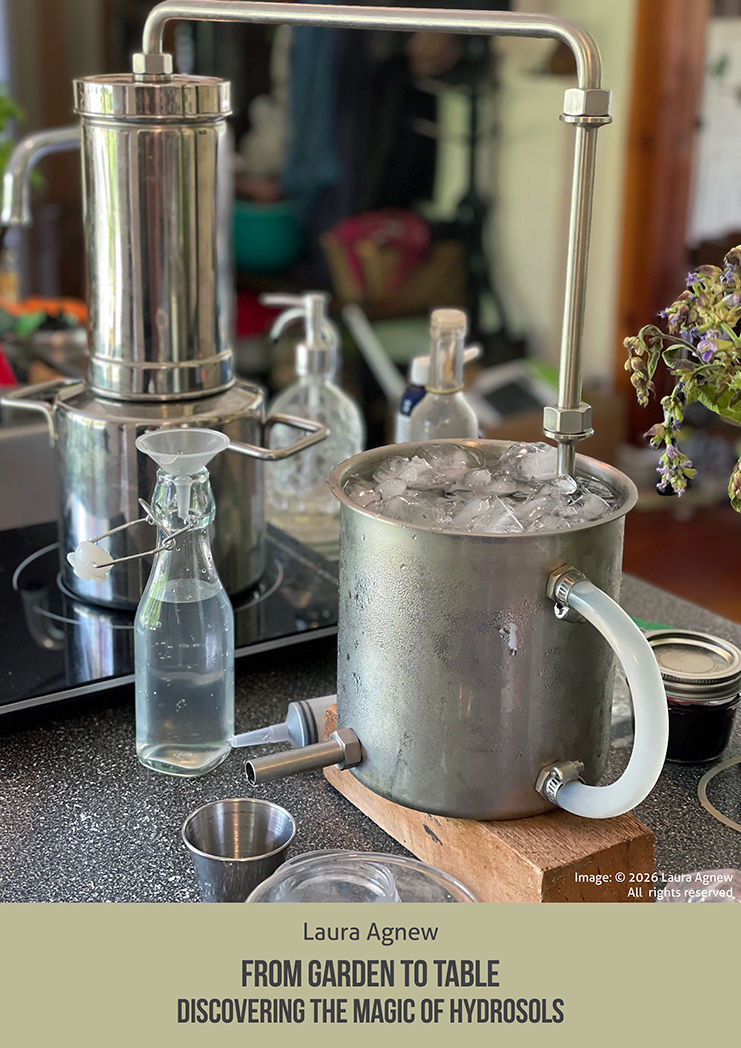
I grew up eating fresh, local produce, and many of my earliest lessons in gardening came from working alongside my mother. Those experiences shaped the way I cook today. As a chef, I believe great food begins with great ingredients, and throughout my career I’ve built relationships with local farmers who share that same passion for quality and seasonal produce. My love of gardening eventually led me to discover hydrosols when a coworker introduced me to the process of gently distilling fresh plant material into fragrant botanical waters. Intrigued, I took a class, became completely hooked, and soon bought my own still.
Making hydrosols has become another way for me to connect with the garden. I love gathering fresh, vibrant, undamaged plants from my herb beds and the surrounding woods, knowing that the quality of the plant material directly influences what comes out of the still. At first, I used my hydrosols primarily for skincare, lotions, salves, and room sprays, but my curiosity as a chef soon led me into the kitchen. Basil, sage, lemon balm, lemon verbena, lavender, rose, and other plants each reveal a completely different personality through distillation.
Using hydrosols in cooking has opened up an entirely new world of flavour for me. A light spritz of basil hydrosol over a tomato salad creates a vibrant, rounded flavour that seems to weave through every bite rather than simply sitting on top like fresh basil. Sage hydrosol surprised me even more—it is softer, sweeter, and smoother than the powerful aroma of fresh sage. I’ve used it in everything from calming room sprays to apple-walnut loaves, where it adds a gentle herbal depth and makes a beautifully fragrant glaze. Floral and herbal waters can also bring something special to drinks, teas, desserts, vinaigrettes, sauces, and marinades.
The more I work with hydrosols, the more possibilities I discover. Each week brings another plant to harvest and another combination to explore, whether it’s lavender with wild carrot, rose with lemon balm, or a simple splash of hydrosol added to lemon and water. For me, hydrosols have become a natural extension of my love of gardening, cooking, and creating. They capture something beyond flavour—they carry the freshness of the garden, the warmth of the season, and the quiet satisfaction of harvesting something I’ve grown myself. They remind me that some of the most extraordinary discoveries can begin with something as simple as a walk through the garden.
The Autumn issue of Aromatika Magazine is packed with heartfelt and inspiring articles. To read the complete article, order your copy of our Autumn issue of Aromatika Magazine (13.3) or subscribe to our beautiful E-Journal yearly subscription by following the link in our bio or simply copy and paste the link here: https://www.aromatikamagazine.com/product-page/aromatika-magazine-13-3-2026-autumn
Over the 164 colourful pages in our Autumn issue, we have some of the most knowledgeable aromatherapists and educators from around the world.
We thank you all for your continued support and hope you'll enjoy the fascinating chapters of our Winter e-journal.
Get your copy of Aromatika Magazine!
To have your copy of our beautiful magazine, follow the link to the shop and get your download, or subscribe to become a four-seasons reader of our quarterly e-journal.


Comments