
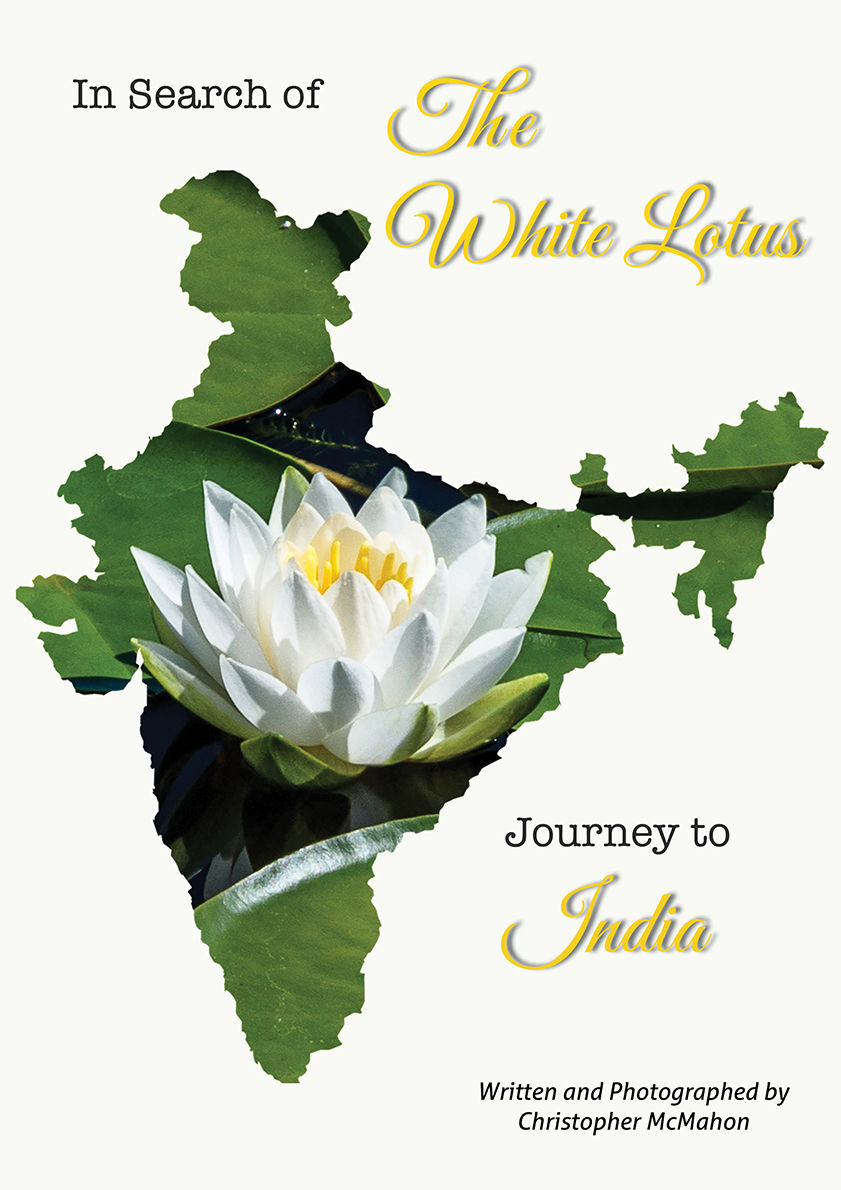
In Search of the White Lotus: Journey to India By Christopher McMahon

Pg. 130-139 - 9-minute read
This article originally appeared in The Aromatic Thymes Vol. 6.3 Late Fall 1998, 22-33.
This paper is re-published in Aromatika Magazine under the permission granted by the copyright holder Aromatic Thymes (Pam Parsons).
I departed from San Francisco in July 1998 for Mumbai, continuing my ongoing exploration of India’s vast aromatic traditions. Each journey into this country has drawn me deeper into a world that feels both ancient and alive, far removed from Western logic and predictability. Upon arrival, I reunited with my friend and mentor, Ramakant, and we immediately began planning our next steps—this time focusing on South India. With his guidance, I prepared to enter a largely hidden network of farmers, distillers, and artisans whose work sustains the rare and complex world of natural fragrance.
Our journey took us by train to Bangalore, cutting through monsoon-soaked landscapes and rural communities that form the backbone of India. These villages, rooted in centuries-old traditions, revealed a powerful simplicity and resilience. From there, we connected with Philip Samuel, a skilled distiller with whom I had been collaborating to produce lotus flower absolutes. The lotus—sacred, elusive, and historically reserved for royalty—had captivated me during an earlier visit, and I saw an opportunity to revive its essence using modern extraction methods while preserving its cultural and ecological significance.
Traveling deep into the countryside, we witnessed firsthand the immense effort required to locate and harvest wild lotus blossoms. There were no signs, no maps—only local knowledge, persistence, and trust. Weeks of searching had led to a handful of viable ponds, each carefully harvested to avoid damaging the ecosystem. Observing the process, from selecting flowers at the precise stage of bloom to the meticulous extraction of their aromatic compounds, made it clear that producing such an oil is as much an art as it is a science. Standing among the lotus ponds at dawn, surrounded by villagers and untouched beauty, I felt a profound connection to both the land and its people.
This experience reinforced my belief that essential oils are far more than commercial products—they are the result of intricate relationships between nature, culture, and human effort. Preserving and sharing the knowledge behind their creation is critical, even if it challenges traditional secrecy in the industry. When we understand the origins of these oils—the environments, the labor, the traditions—we begin to value them not just for their scent, but for their deeper role in healing and reconnecting us to the natural world.
The Spring issue of Aromatika Magazine is packed with heartfelt and inspiring articles. To read the complete article, order your copy of our Spring issue of Aromatika Magazine (13.1) or subscribe to our beautiful E-Journal yearly subscription by following the link in our bio or simply copy and paste the link here: https://www.aromatikamagazine.com/product-page/aromatika-magazine-13-1-2026-spring
Over the 146 colourful pages in our Spring issue, we have some of the most knowledgeable aromatherapists and educators from around the world.
We thank you all for your continued support and hope you'll enjoy the fascinating chapters of our Winter e-journal.
Get your copy of Aromatika Magazine!
To have your copy of our beautiful magazine, follow the link to the shop and get your download, or subscribe to become a four-seasons reader of our quarterly e-journal.


This review of Christopher McMahon's work is an absolute treat for travel lovers! Reading about his spiritual and cultural exploration in "In Search of the White Lotus: Journey to India" makes you want to pack your bags immediately. While India offers incredible sensory depth, it actually reminds me of planning another dream escape, like booking a relaxing bosphorus yacht tour to take in historic waterfronts. McMahon captures the essence of profound discovery so vividly. His writing style completely pulls you into the vibrant chaos and beauty of the sub-continent. A truly inspiring read for anyone dreaming of transformative adventures across the globe!
This post really hit home for me. Reading about Christopher McMahon's vivid experiences in In Search of the White Lotus: Journey to India brings back that deep sense of wonder only true exploration offers. It feels a lot like planning an epic New Zealand travel itinerary, where every turn introduces a completely new landscape and shifts your perspective. McMahon captures the chaotic, soulful beauty of India so well. His descriptive writing style makes you feel like you are right there walking the bustling streets alongside him. Thanks for sharing this fantastic review; it has definitely inspired my next big adventure!
This post really hit home for me. Reading about Christopher McMahon's vivid experiences in In Search of the White Lotus: Journey to India brings back that deep sense of wonder only true exploration offers. It feels a lot like planning an epic New Zealand travel itinerary, where every turn introduces a completely new landscape and shifts your perspective. McMahon captures the chaotic, soulful beauty of India so well. His descriptive writing style makes you feel like you are right there walking the bustling streets alongside him. Thanks for sharing this fantastic review; it has definitely inspired my next big adventure!